
How to Get a Grease Gun Off a Fitting Without Damaging the Zerk
If your grease gun is stuck on a fitting, do not yank the hose or force the coupler sideways. In most cases, the coupler is gripping the Zerk fitting tightly because of jaw tension, excessive coupler adjustment, or pressure trapped between the gun and the fitting.
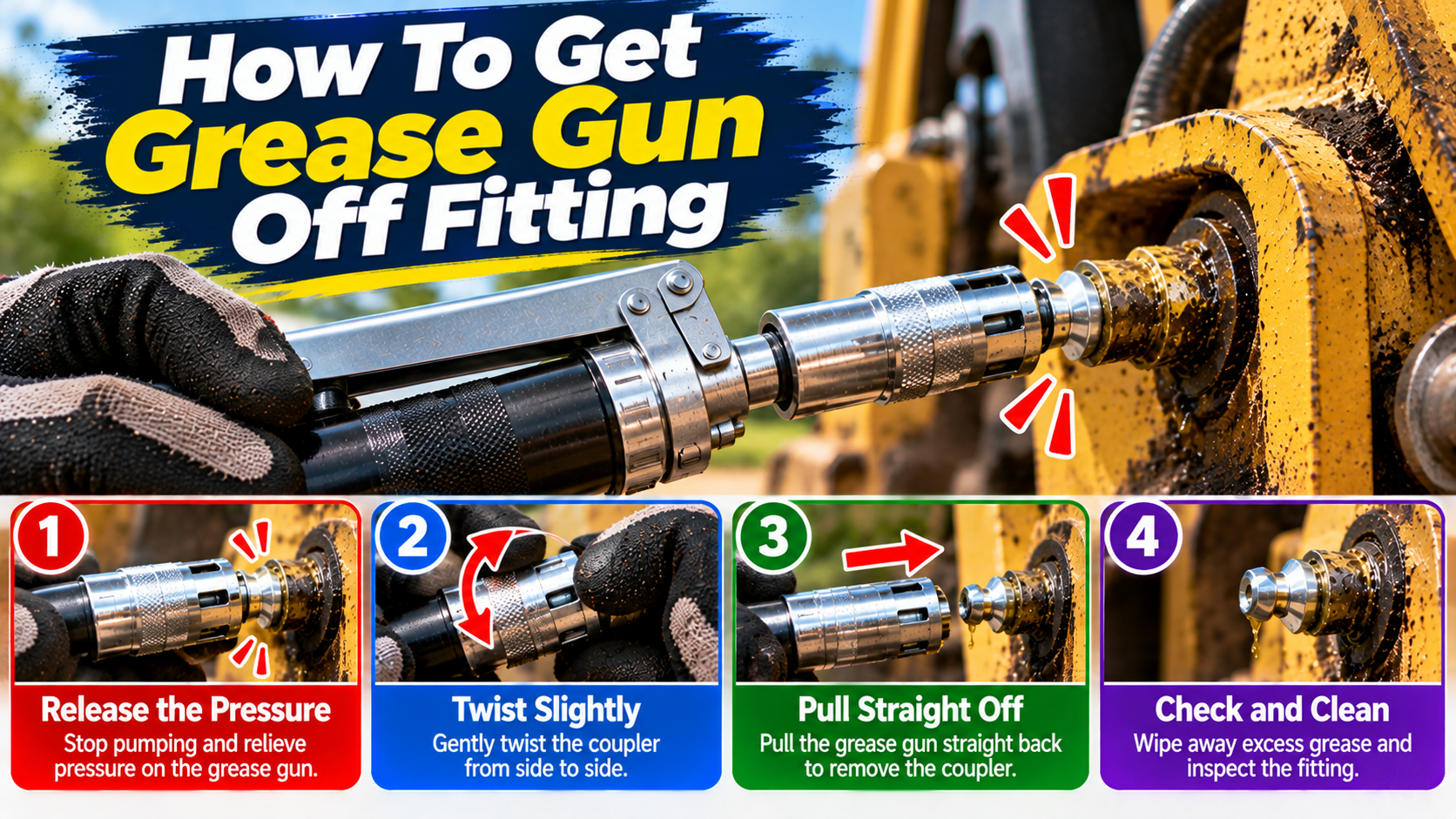
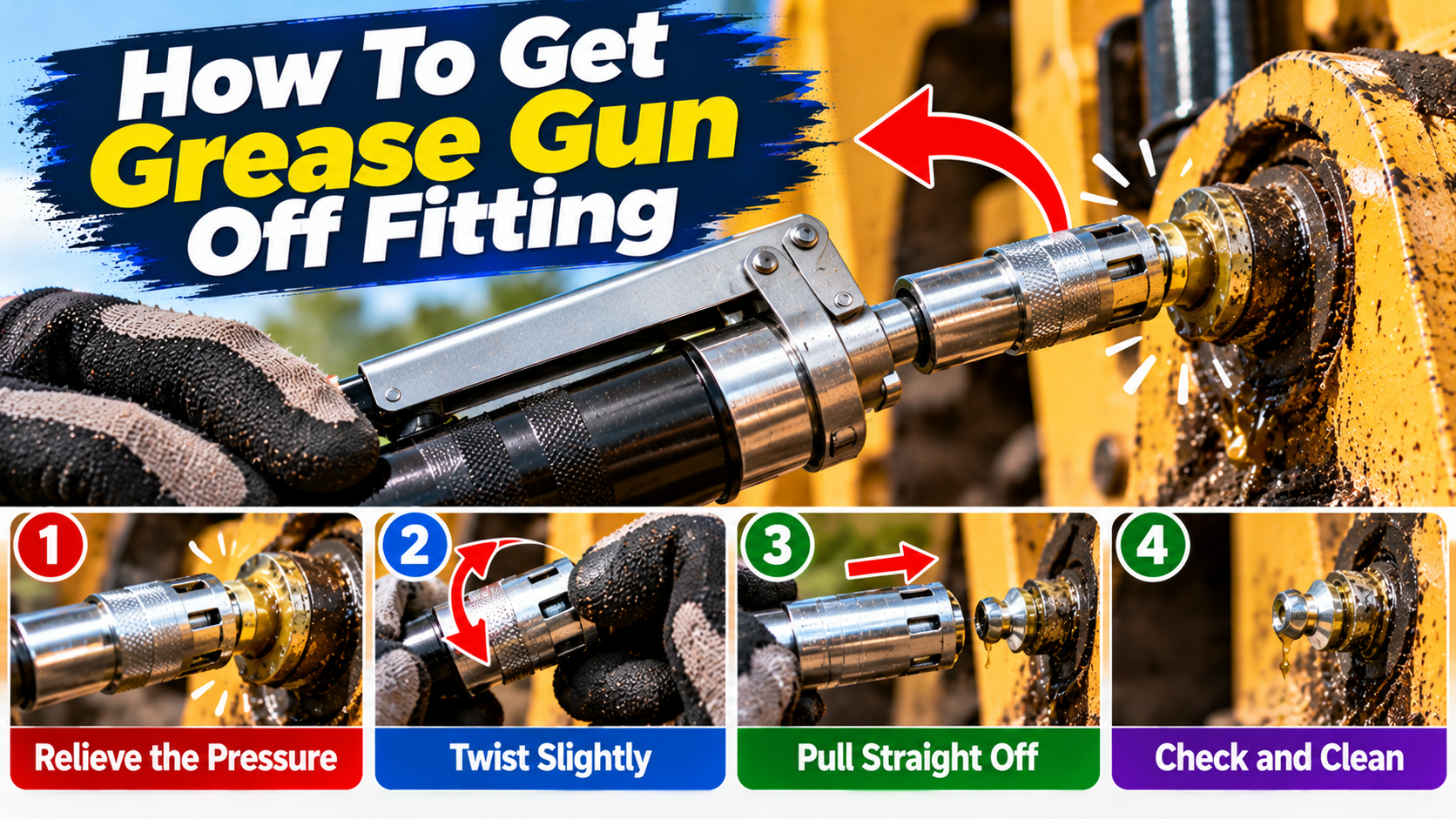
For a standard grease coupler, first stop pumping, keep the coupler aligned with the fitting, then gently tilt or rock the coupler while pulling it straight off. If it still will not release, relieve pressure if your grease gun or coupler provides a safe method to do so. With a locking coupler, use its release lever or sleeve according to the manufacturer’s instructions.
The key is to remove the coupler without breaking the Zerk, damaging the coupler jaws, or exposing yourself to high-pressure grease.
Why Does a Grease Gun Get Stuck on a Fitting?
A grease gun coupler is designed to grip the head of a grease fitting tightly enough to create a seal while grease is pumped into the component. That grip can sometimes become difficult to release.
The most common causes include:
- Pressure trapped in the connection: Back pressure can keep the coupler loaded against the fitting.
- A blocked grease fitting: Hardened grease, dirt, corrosion, or a restricted passage can prevent lubricant from flowing and increase pressure.
- An overtightened adjustable coupler: The jaws may clamp the Zerk too aggressively.
- A damaged fitting: A bent, mushroomed, rusty, or worn Zerk can catch inside the coupler.
- Worn or damaged coupler jaws: Internal coupler components can bind instead of releasing smoothly.
- Side loading: Pulling at an angle can make the jaws grip the fitting even harder.
Understanding which problem you have makes removal much easier—and reduces the chance of snapping the grease fitting.
How to Get a Grease Gun Off a Fitting: Step by Step
Step 1: Stop Pumping the Grease Gun
Once the fitting has received the required amount of grease—or if grease will no longer enter—stop pumping.
Do not keep squeezing the trigger or lever simply because the coupler is difficult to remove. If the fitting is blocked, additional pumping can increase pressure in the hose and coupler.
Step 2: Keep the Coupler and Zerk as Straight as Possible
Before trying to remove the coupler, make sure you are not pulling hard on the hose from the side.
Support the hose or extension so the coupler is not being forced sideways against the Zerk. This reduces stress on both the fitting and the coupler.
Step 3: Gently Tilt or Rock a Standard Coupler
With a conventional jaw-style coupler, a small amount of controlled movement can help the jaws release from the fitting.
Grip the coupler body—not the flexible hose—and apply a small tilting or rocking motion while pulling away from the Zerk. The goal is to release the jaws, not bend the fitting.
Do not violently twist, pry, or jerk the coupler sideways. Excessive leverage can damage the Zerk or coupler.
Step 4: Relieve Trapped Pressure If Necessary
If the coupler remains locked in place, pressure may be trapped in the grease line or behind a clogged fitting.
Use only the pressure-relief method provided for your specific grease gun or coupler. Depending on the design, this may involve a manufacturer-provided pressure-release feature or another specified procedure.
Do not loosen a pressurized hose connection or disassemble the coupler while it is under pressure. Grease guns can operate at extremely high pressure.
Step 5: Use the Release Mechanism on a Locking Coupler
If your grease gun has a locking coupler, do not treat it like a standard friction-fit coupler.
Locking designs typically use a lever, sleeve, or other mechanism to open the jaws. Activate the release mechanism as directed by the coupler manufacturer, then remove the coupler from the Zerk.
Some locking couplers are specifically designed to release even when pressure is present, but you should still follow the instructions for your exact model.
Step 6: Inspect the Fitting and Coupler
Once the coupler is removed, inspect both parts before moving to the next grease point.
Look for:
- A bent or loose Zerk fitting
- Damage around the fitting head
- Grease leaking around the coupler instead of entering the fitting
- Worn coupler jaws
- Cracks or damage in the hose
- Dirt or hardened grease around the fitting
If the same fitting repeatedly traps the coupler, the problem may be the fitting rather than your removal technique.
What If the Grease Gun Coupler Still Won’t Come Off?
If gentle movement and the proper release procedure do not work, stop applying force and troubleshoot the cause.
Check for Excessive Back Pressure
A fitting that will not accept grease can cause pressure to build in the hose and coupler. This can make some couplers much harder to release.
If your gun has a safe manufacturer-specified pressure-relief procedure, use it before making another removal attempt.
Check Whether the Zerk Is Clogged
A grease fitting may become restricted by old grease, contamination, corrosion, or debris.
If grease refuses to enter the fitting, continuing to pump harder is usually not the best solution. Once the system is safely depressurized and the coupler is removed, inspect the Zerk. A damaged or badly clogged fitting may need cleaning or replacement.
This is closely related to ***how to clean a grease fitting*** and ***how to replace a Zerk fitting***.
Check the Coupler Adjustment
Some conventional grease couplers are adjustable. Tightening the coupler can improve its grip and seal, but tightening it too far may make removal unnecessarily difficult.
If your coupler is adjustable, consult its instructions and set it so it seals reliably without gripping every fitting excessively.
Inspect Worn Coupler Jaws
Coupler jaws wear over time. Dirt, corrosion, deformation, or damaged internal parts can prevent smooth attachment and removal.
If the coupler frequently sticks even on good fittings, replacing or rebuilding the coupler may be more effective than repeatedly fighting it.
Standard Grease Coupler vs. Locking Coupler
The correct removal technique depends on which type of coupler you have.
Standard Coupler
A traditional grease gun coupler uses internal jaws that grip the Zerk fitting. You normally push it onto the fitting and remove it with controlled movement after greasing.
Standard couplers are inexpensive and widely used, but a poorly adjusted or pressurized coupler can become difficult to remove.
Locking Grease Coupler
A locking coupler mechanically locks its jaws around the fitting. Instead of relying on pulling force for removal, it provides a release mechanism.
This design can be useful when working with difficult fittings or when you frequently experience couplers slipping off or becoming stuck.
If you are choosing a new setup, ***types of grease gun couplers*** can help explain the practical differences between conventional and locking designs.
Can You Loosen a Grease Gun Coupler?
Some standard couplers allow jaw tension to be adjusted by rotating part of the coupler body. A slightly looser setting may make attachment and removal easier, while a tighter setting can improve grip on a fitting.
However, not every coupler is adjusted in the same way. Before turning or disassembling anything, check the coupler manufacturer’s instructions.
Most importantly, never attempt to disassemble or loosen pressurized components as a shortcut for releasing a stuck fitting.
Should You Use Pliers to Remove a Stuck Grease Coupler?
Pliers should not be your first solution for a standard coupler. Crushing, twisting, or wrenching on the coupler can damage its body, jaws, seal, hose connection, or the Zerk itself.
There are specialized couplers whose manufacturers may specify a particular technique for releasing the mechanism under unusual back-pressure conditions. In that case, follow the instructions for that exact product rather than applying a generic pliers method to every grease gun.
For most users, the safer order is: stop pumping, align the coupler, use gentle controlled movement, safely relieve pressure if required, and inspect the fitting.
What Not to Do When a Grease Gun Is Stuck on a Zerk
- Do not yank the hose. Pulling on the flexible hose can damage the hose or its connections.
- Do not violently bend the Zerk sideways. The fitting can snap or loosen in the component.
- Do not keep pumping against an obvious blockage. This can increase pressure without solving the restriction.
- Do not put your fingers over a suspected leak. High-pressure grease can penetrate skin.
- Do not loosen pressurized hose fittings. Depressurize the system according to the manufacturer’s procedure first.
- Do not assume every locking coupler releases the same way. Use its intended release mechanism.
Why Won’t the Grease Fitting Take Grease?
If the coupler becomes stuck and the fitting also refuses to accept grease, the fitting or lubrication passage may be restricted.
Possible causes include:
- Hardened old grease
- Dirt or corrosion inside the Zerk
- A damaged check ball in the fitting
- A blocked lubrication passage
- Pressure inside the component
- An incorrect or damaged fitting
- Cold or very thick grease that is difficult to move
Do not automatically assume the grease gun is defective. First determine whether grease flows normally through the gun when it is safely disconnected from the problem fitting.
For broader troubleshooting, ***why is my grease gun not working*** is a useful related maintenance topic.
How to Prevent a Grease Gun From Getting Stuck Next Time
Clean the Zerk Before Greasing
Wipe dirt and hardened grease from the fitting before attaching the coupler. This reduces contamination and helps the coupler seat correctly.
Keep the Coupler Properly Adjusted
If you use an adjustable conventional coupler, avoid setting the jaws tighter than necessary to maintain a seal.
Replace Damaged Zerks
A deformed fitting can grab the coupler or cause leaks. Replacement grease fittings are inexpensive compared with the time spent repeatedly fighting a damaged one.
Maintain the Coupler
Keep the coupler clean and inspect its jaws and seal. Replace or rebuild worn components when appropriate.
Use the Correct Grease
The lubricant should match the equipment manufacturer’s specification. Extremely thick grease, contamination, or incompatible grease can contribute to difficult lubrication conditions.
If you are new to lubrication equipment, ***what is a grease gun used for*** provides a useful overview of grease guns, fittings, and common applications.
Grease Gun Safety: High Pressure Is the Real Risk
Grease guns may appear simple, but high-output models can develop thousands of pounds per square inch of pressure. Some cordless models are rated as high as 10,000 PSI.
That means a damaged hose or tiny high-pressure leak can be dangerous. Grease injected through the skin may initially look like a small puncture but can cause serious tissue injury.
- Wear appropriate eye and hand protection.
- Inspect the hose and coupler before use.
- Never point the grease gun at yourself or another person.
- Keep hands away from suspected high-pressure leaks.
- Do not operate with a kinked, cracked, or damaged hose.
- Do not work around moving machinery unless the equipment’s maintenance procedure specifically allows it and all required safety controls are followed.
- If grease is injected through the skin, seek immediate medical attention.
Frequently Asked Questions
How do you release a grease gun from a Zerk fitting?
With a standard coupler, stop pumping, keep the connection aligned, then gently tilt or rock the coupler while pulling it off. If trapped pressure is preventing release, use the safe pressure-relief procedure specified for your equipment. If you have a locking coupler, operate its release lever or sleeve.
Why is my grease gun coupler stuck on the Zerk?
Common causes include trapped pressure, a clogged Zerk, an overtightened adjustable coupler, worn coupler jaws, a damaged fitting, or excessive side loading on the connection.
Can I twist the grease gun coupler off?
A small controlled rocking or tilting motion can help release some standard couplers, but aggressive twisting is not recommended. Excessive force can bend or break the grease fitting and damage the coupler.
Why does my grease gun coupler lock on too tightly?
If it is an adjustable conventional coupler, the jaw tension may be set too tight. The fitting may also be oversized, damaged, or deformed. Pressure buildup can make the connection feel even tighter.
Can a grease fitting break off?
Yes. A Zerk can snap, strip, loosen, or deform if excessive side force or leverage is applied. That is why you should avoid wrenching the grease gun hose sideways when the coupler is stuck.
Should I replace a grease fitting that keeps trapping the coupler?
If the fitting is visibly damaged, corroded, loose, deformed, or repeatedly causes problems despite a properly functioning coupler, replacement may be appropriate. Confirm the correct thread type and fitting style for the equipment before replacing it.
Conclusion
If you are wondering how to get a grease gun off a fitting, start with the least aggressive solution: stop pumping, straighten the connection, gently rock or tilt a standard coupler, and use the proper pressure-release or locking-coupler mechanism when applicable.
Do not turn a stuck grease coupler into a strength test. If it refuses to release, investigate back pressure, a clogged or damaged Zerk, excessive coupler tension, or worn coupler jaws.
Most importantly, respect the pressure involved. Correct technique protects the grease fitting and your tools—but it also protects you from potentially serious high-pressure grease injuries.
