
How to Clean a Car’s Inside Windscreen With Vinegar Without Leaving Streaks
To clean the inside of a car windscreen with vinegar, mix equal parts white distilled vinegar and water, lightly apply the solution to a clean microfiber cloth, wipe the interior glass in sections, and immediately buff it dry with a second clean microfiber towel.
This simple method can help remove fingerprints, light grease, smoke residue, and the hazy film that builds up on interior automotive glass. The key is using clean towels, a controlled amount of solution, and a final dry buff.
Important: If your windscreen has aftermarket tint, film, or a specialty coating, check the manufacturer or installer’s cleaning instructions before using vinegar or any homemade cleaner.
What You Need
- White distilled vinegar
- Clean water
- A clean spray bottle
- At least two clean microfiber glass towels
- An extra dry microfiber towel for stubborn haze
- Optional gloves to prevent fresh fingerprints
Avoid towels previously used with wax, interior dressing, tire shine, or oily detailing products. Residue in the towel can transfer to the glass and create more streaks.
Best Vinegar Mixture for an Inside Windscreen
A practical starting mixture is:
- 1 part white distilled vinegar
- 1 part water
For example, mix 1 cup of white vinegar with 1 cup of water. Use plain white distilled vinegar rather than colored or flavored varieties.
How to Clean Cars Inside Windscreen With Vinegar: Step by Step
Step 1: Park in the Shade
Start with cool glass. Direct sunlight and hot glass can make cleaner evaporate too quickly and increase streaking.
Step 2: Clean the Dashboard First
Remove dashboard dust before cleaning the glass. Avoid spraying dashboard cleaners or dressings toward the windscreen because overspray can create an oily film.
Step 3: Prepare the Vinegar Solution
Combine equal amounts of white distilled vinegar and water in a clean spray bottle and gently mix.
Step 4: Spray the Cloth Rather Than Soaking the Glass
Lightly dampen your first microfiber towel. Applying cleaner to the towel gives you more control and reduces overspray onto dashboards, screens, trim, upholstery, and electronics.
Step 5: Wipe the Windscreen in Sections
Work across the windscreen in manageable sections using overlapping strokes. Pay attention to the lower glass near the dashboard, where haze can be particularly noticeable.
A useful detailing technique is to wipe the inside horizontally and the outside vertically. If a streak remains, its direction helps identify which side needs another pass.
Step 6: Buff Immediately With a Dry Microfiber Towel
Before the solution air-dries, buff the section with a second clean, dry microfiber towel. Turn the towel frequently so a dry surface contacts the glass.
Step 7: Inspect From Different Angles
Check the windscreen from the driver and passenger positions. Low-angle light often reveals haze or streaks that are invisible from straight ahead.
Step 8: Repeat Only Where Needed
If greasy areas remain, repeat the damp-wipe and dry-buff process locally. Two controlled passes are usually better than saturating the entire windscreen.
Why Does the Inside of a Car Windscreen Get Greasy?
Interior windscreen haze can come from fingerprints and skin oils, smoke or vaping residue, dashboard-product overspray, dust, environmental contaminants, residue from previous cleaners, and volatile compounds released by interior materials over time.
The film may become especially obvious while driving toward bright sunlight or when oncoming headlights hit the glass at night.
For broader interior detailing, ***how to clean car windows inside*** is a useful related topic.
How to Remove Heavy Greasy Film
If one cleaning pass does not remove the haze, use a fresh microfiber towel rather than simply adding more solution. Apply a small amount of cleaner, work one section, and immediately buff it with a separate dry towel.
A common reason haze keeps returning is that the cleaning towel has become loaded with residue. Continuing with the same dirty section simply redistributes the film.
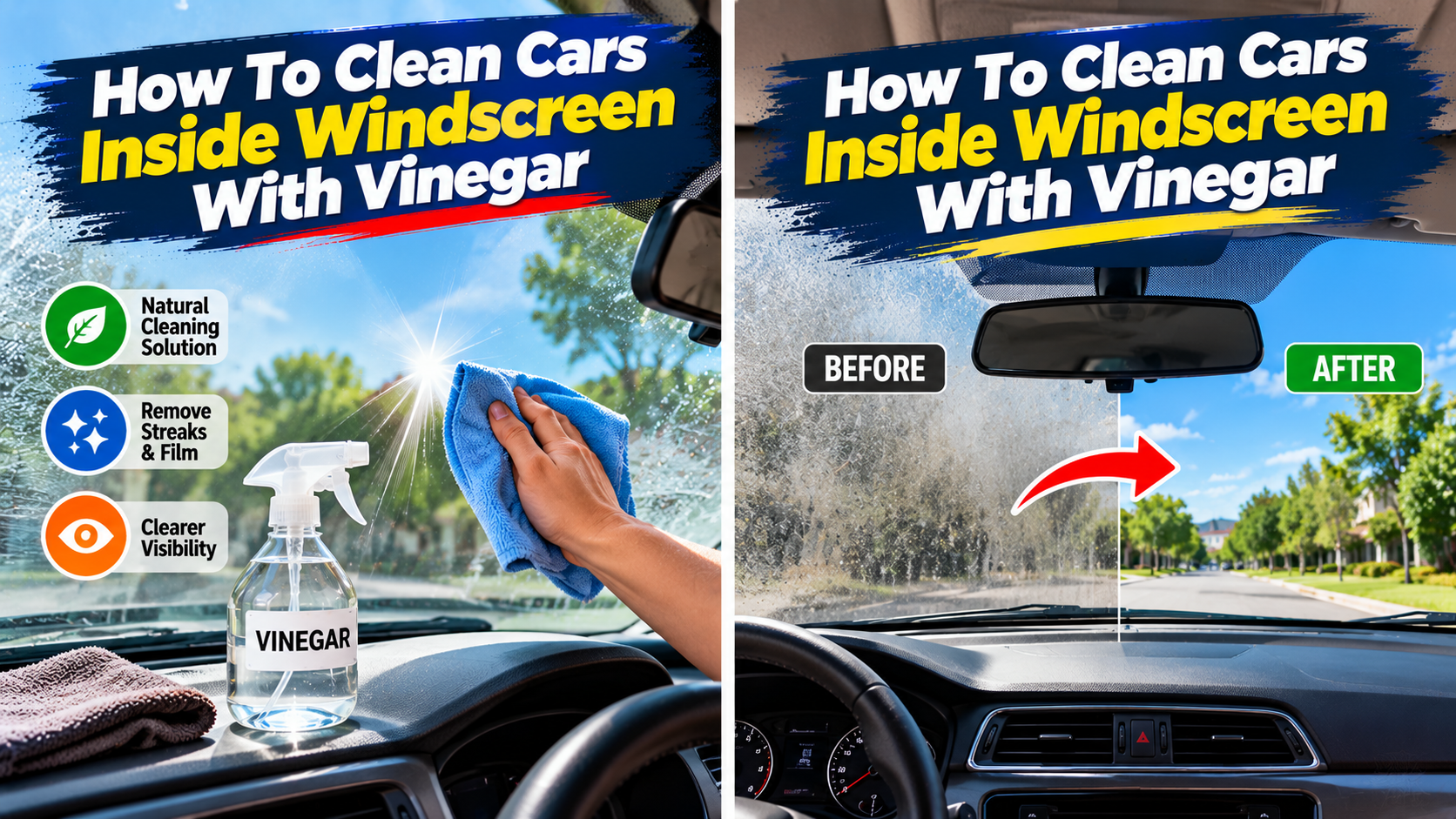
How to Reach the Bottom of the Windscreen
- Sit in the passenger seat when reaching toward the driver’s side.
- Use the back of your hand to press a folded microfiber towel into lower corners.
- Fold the towel into a compact pad so it remains flat against the glass.
- Consider a windshield-cleaning wand for vehicles with deep dashboards.
How to Avoid Streaks
Use Less Liquid
A lightly damp towel is easier to control than a saturated windscreen.
Use Two Separate Towels
One towel loosens contamination; the second dries and buffs. Trying to finish with the same wet towel often leaves smears.
Keep Glass Towels Clean
Keep towels contaminated with wax, silicone-rich dressings, oils, or fabric-softener residue away from automotive glass.
Work on Cool Glass
Shade slows evaporation and gives you time to remove the solution before it dries.
Buff Completely Dry
Finish with a clean, dry portion of microfiber and inspect from several angles.
Can Vinegar Damage a Car Windscreen?
Plain automotive glass generally tolerates brief cleaning with diluted vinegar, but a windscreen may also have aftermarket film, specialty coatings, cameras, sensors, trim, and other materials around it.
Keep the solution controlled and follow manufacturer instructions for any film or coating. Do not allow cleaner to pool on dashboard materials, leather, displays, trim, or sensitive electronics.
Can You Use Vinegar on Tinted Car Windows?
Do not assume one homemade cleaner is compatible with every aftermarket window film. Different films can have different care requirements. Check the film manufacturer’s instructions or ask the installer which cleaners are approved.
For general product compatibility, ***can you use regular glass cleaner on car windows*** covers another common automotive-glass question.
Should You Add Dish Soap?
For routine interior glass cleaning, keeping the mixture simple reduces the risk of additional residue. Too much dish soap can leave surfactants behind and require extra wiping.
More cleaning product does not automatically produce cleaner glass.
Vinegar vs. Automotive Glass Cleaner
Vinegar and Water
- Inexpensive and easy to prepare
- Useful for light grime and greasy haze
- Has a noticeable vinegar odor during use
- Requires compatibility checks around unknown films or coatings
Dedicated Automotive Glass Cleaner
- Ready to use
- Formulated specifically for automotive cleaning
- Some products are explicitly labeled safe for aftermarket tint
- May be more convenient for frequent detailing
If your vehicle has aftermarket film, a dedicated automotive glass cleaner with clear compatibility instructions can be the simpler choice.
Common Mistakes to Avoid
Using a Dirty Microfiber Towel
Wax, dressing, grease, and old cleaner residue can transfer directly back onto the windscreen.
Using Too Much Cleaner
Heavy spraying creates runs and makes complete removal harder.
Cleaning Hot Glass
Fast evaporation can leave streaks before you have time to buff.
Skipping the Dry Buff
A second dry towel is one of the most important steps for a clear finish.
Using Dashboard Towels on Glass
Keep dedicated glass towels separate from towels used with interior dressings.
Ignoring the Outside Surface
Some apparent interior haze is actually exterior contamination. Clean both sides before assuming the inside still needs work.
How Often Should You Clean the Inside Windscreen?
There is no universal schedule. Clean the windscreen whenever fingerprints, haze, or residue begins to reduce clarity—especially when glare becomes noticeable in sunlight or under headlights.
Frequently Asked Questions
Can I clean the inside of my windshield with vinegar?
Yes, diluted white distilled vinegar can be used on ordinary interior automotive glass. A 1:1 mixture of white vinegar and water is a practical starting point. Apply it sparingly with microfiber and buff dry. Check manufacturer guidance first for aftermarket film or specialty coatings.
What is the best way to clean a greasy inside windshield?
Use a clean microfiber towel lightly dampened with an appropriate glass cleaner or diluted vinegar solution, work in small sections, and immediately buff with a second dry towel. Rotate or replace the cleaning towel as it becomes contaminated.
Why is my windshield still streaky after cleaning?
Common causes include too much cleaner, hot glass, contaminated towels, incomplete drying, or residue on the opposite side of the windscreen.
Can I spray vinegar directly on the windshield?
Inside the vehicle, spraying the microfiber towel is generally easier to control and minimizes overspray onto the dashboard, trim, displays, and other materials.
What kind of vinegar should I use?
Use plain white distilled vinegar, not flavored or colored vinegar.
Does vinegar stop a windshield from fogging?
Cleaning oily residue can improve clarity, but vinegar is not a guaranteed anti-fog treatment. Fogging primarily occurs when moisture condenses on cooler glass. The vehicle’s defogger, air conditioning, ventilation, and cabin moisture control are the main ways to manage it.
Can I use paper towels instead of microfiber?
Paper towels can wipe glass, but clean microfiber glass towels are generally better suited to lifting residue and performing a streak-free final buff.
Conclusion
If you want to know how to clean a car’s inside windscreen with vinegar, the process is straightforward: mix equal parts white distilled vinegar and water, lightly dampen a clean microfiber towel, clean cool glass in sections, and immediately buff it dry with a second clean towel.
The biggest difference between a hazy windscreen and a clear one is technique. Use less cleaner, keep your towels clean, work away from direct sunlight, and always finish with a dry buff.
For windscreens with aftermarket tint, protective film, or specialty coatings, follow the manufacturer’s cleaning instructions before using vinegar. Used appropriately on compatible glass, this inexpensive method can improve clarity and reduce distracting interior haze.
