
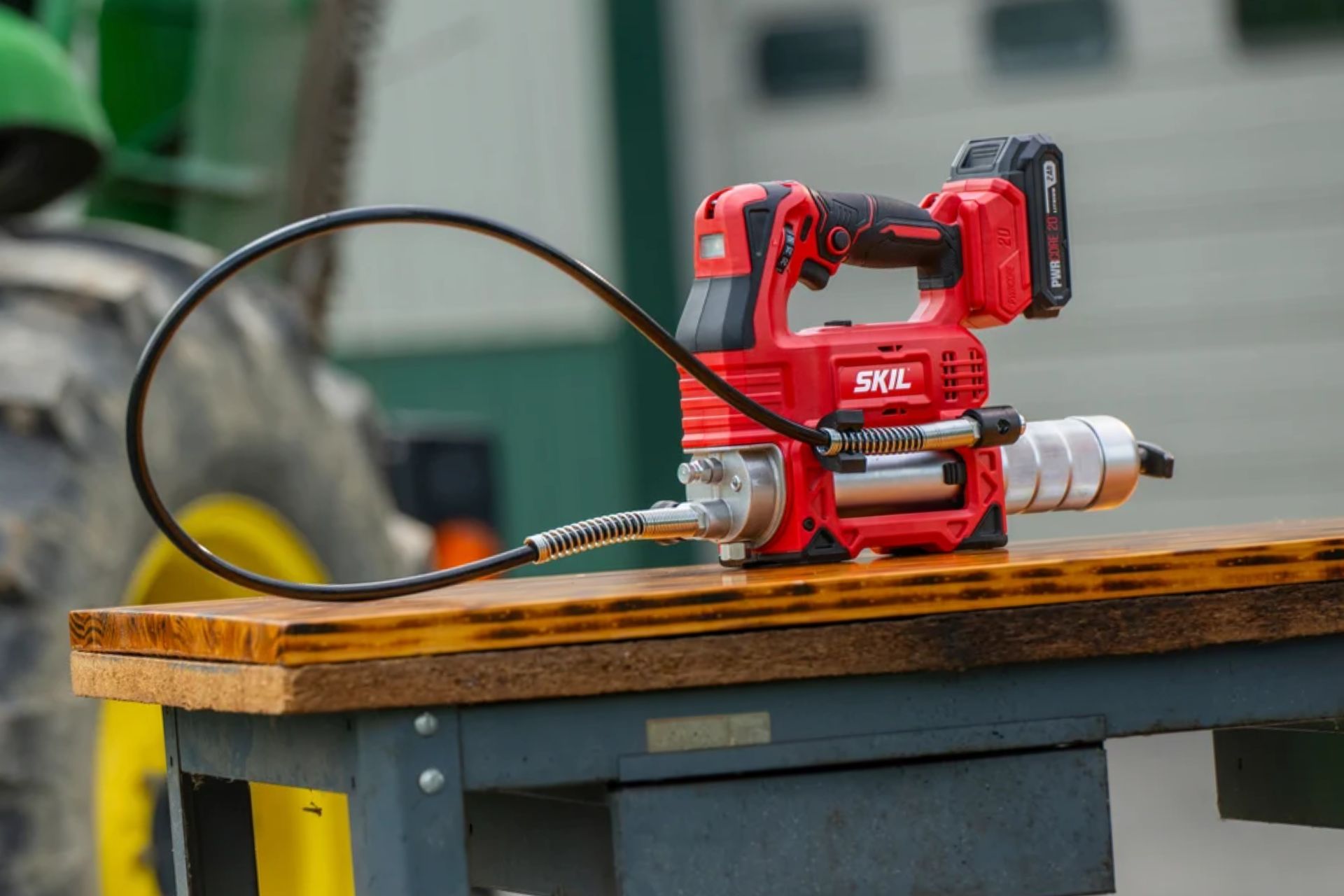
A Grease Gun may spend far more time in storage than it does in your hands, yet storage is one of the most overlooked parts of lubrication maintenance. Mechanics, farmers, equipment owners, and DIY users often finish a greasing job and simply place the tool on a workbench, shelf, truck bed, or toolbox until it is needed again.
That habit can lead to leaking grease, contaminated couplers, damaged hoses, messy storage areas, and lubricant degradation. Poor storage practices may also introduce dust or moisture into the grease, potentially carrying contaminants directly into bearings, bushings, pins, and other lubrication points the next time the gun is used.
Correct storage does not require an elaborate system. A clean environment, sensible temperature, protected coupler, proper positioning, and a few minutes of inspection can make a significant difference.
This guide explains how to store grease guns correctly, where to keep them, what to do with partially used cartridges, how to prevent contamination, and how to prepare the tool for long-term storage.
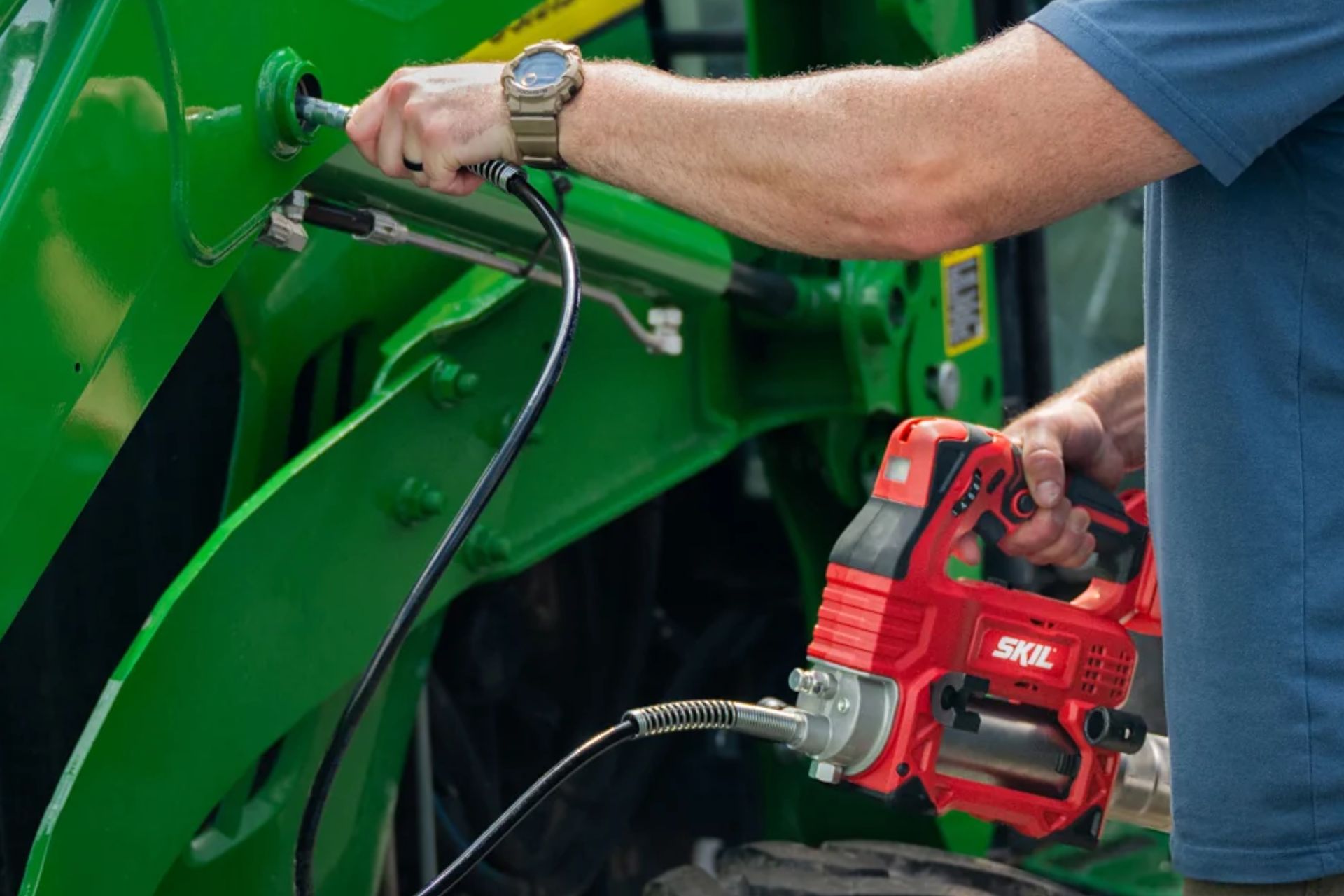
Why Proper Grease Gun Storage Matters
A grease gun is designed to deliver lubricant into mechanical components with precision. If the tool itself becomes contaminated or damaged during storage, that precision can be compromised.
Consider what happens when a grease gun is left uncovered in a dusty workshop.
Fine particles can collect around the coupler. The next time you connect it to a grease fitting, some of that contamination may be transferred to the lubrication point.
Moisture presents another problem. Water contamination can adversely affect lubricants and the components they are intended to protect.
Then there is leakage. A loaded grease gun exposed to unsuitable temperatures or stored carelessly can create an unpleasant mess on shelves, floors, tools, or vehicle compartments.
Proper storage helps:
- Protect grease from contamination
- Reduce accidental leakage
- Keep the coupler clean
- Protect flexible hoses
- Reduce exposure to moisture
- Keep different lubricants properly identified
- Make the tool easier to find
- Maintain a cleaner workshop
- Keep the grease gun ready for its next service job
Storage should therefore be considered part of your overall lubrication procedure rather than an afterthought.
How to Store a Grease Gun Correctly
The best way to store a Grease Gun is in a clean, dry, temperature-stable area where the tool is protected from dust, water, excessive heat, direct sunlight, and accidental damage.
Before putting it away, wipe excess grease from the gun, hose, nozzle, and coupler.
Inspect the hose for damage and make sure the coupler is reasonably clean.
Place a protective cap over the coupler when possible.
Store the gun in a dedicated location rather than tossing it into an open container with dirty tools.
If you maintain several grease guns containing different lubricants, label each tool clearly.
For longer periods of inactivity, inspect the cartridge or bulk grease condition before storage and follow the lubricant manufacturer’s storage recommendations.
These simple steps provide a strong foundation for keeping the tool clean and functional.
Clean the Grease Gun Before Storage
One of the easiest improvements you can make is cleaning the outside of the grease gun after every use.
This does not mean completely disassembling the tool each time.
Start by wiping away grease from the barrel, handle, hose, coupler, and pump head.
Pay particular attention to the coupler.
During equipment servicing, the coupler may come into contact with old grease, soil, dust, metal debris, and other contaminants around lubrication fittings.
Leaving this residue on the tool creates an unnecessary contamination risk.
Use clean shop towels or suitable disposable wipes. If additional cleaning is necessary, follow the tool manufacturer’s recommendations concerning cleaners and solvents.
Avoid allowing cleaning fluids, water, or debris to enter the grease outlet.
The goal is straightforward: put a clean tool into storage so that you retrieve a clean tool for the next job.
Protect the Grease Gun Coupler
The coupler is a small component with an important job.
It provides the connection between the grease gun and the equipment’s grease fitting. Because grease passes directly through this component, cleanliness matters.
Never deliberately place the coupler on a dirty floor, dusty shelf, truck bed, or greasy workbench.
A protective cap or suitable coupler cover is an inexpensive way to reduce contamination during storage.
If your gun does not have a cap, consider storing the coupler in a protected position where it will not contact dirty surfaces.
Before using the gun again, wipe the coupler clean.
You should also clean the equipment’s grease fitting before attaching the gun.
Protecting both sides of the connection helps reduce the chance of pushing unwanted material into the component you are trying to lubricate.
Should You Store a Grease Gun With Grease in It?
In many cases, a grease gun can remain loaded between routine maintenance jobs, particularly when the same compatible grease will be used again soon.
However, several factors should influence your decision:
- How long the gun will remain unused
- Storage temperature
- Grease manufacturer’s recommendations
- Condition of the cartridge
- Possibility of lubricant cross-contamination
- Condition of the grease gun
- Whether the gun is dedicated to one grease type
For a gun that is used regularly with one lubricant, leaving the cartridge installed may be practical.
Long-term storage requires more consideration.
Grease can experience changes during storage, particularly under unsuitable environmental conditions. Oil separation may occur in some circumstances, and extreme temperatures can negatively affect storage stability.
If a loaded gun has been sitting unused for a very long period, inspect the grease before assuming it is suitable for critical equipment.
When in doubt, consult the lubricant manufacturer’s storage and shelf-life guidance.
Where Should You Store a Grease Gun?
Choose a location that is clean, dry, organized, and protected from large temperature swings.
Suitable locations may include:
- A closed workshop cabinet
- A dedicated lubrication cabinet
- A clean tool-storage area
- An enclosed maintenance room
- A wall-mounted grease gun holder
- A protected service cart
- A clean equipment maintenance cabinet
Avoid locations where the gun is exposed to rain, wash-down water, excessive dust, chemical contamination, or direct sunlight.
A dedicated storage location offers another practical benefit: workers always know where the lubrication equipment belongs.
This reduces the temptation to leave a grease gun wherever the previous maintenance job happened to end.
Store Your Grease Gun Away From Excessive Heat
Heat can create several storage problems.
A grease gun left in direct sunlight, beside a heater, or inside an extremely hot vehicle can experience conditions very different from those in a controlled workshop.
Elevated temperatures may contribute to lubricant separation or leakage, depending on the grease formulation and storage conditions.
A hot gun can also become messy if lubricant escapes around seals, fittings, or the cartridge area.
For this reason, avoid storing grease guns:
- Next to furnaces
- Beside radiators
- In direct sunlight
- Near hot machinery
- In unusually hot enclosed spaces
- Anywhere exceeding the lubricant manufacturer’s recommended storage conditions
Temperature stability is preferable to repeated heating and cooling cycles.
The exact acceptable temperature range depends on the lubricant and tool, so consult manufacturer information when storing specialized greases.
Avoid Excessive Cold During Storage
Very cold conditions can also be inconvenient.
Grease generally becomes more resistant to flow as temperature decreases. A grease gun taken directly from an extremely cold environment may therefore require more effort to operate.
Battery-powered models introduce another consideration because batteries can also be affected by storage temperature.
For manual guns, the main concern is usually lubricant pumpability and material condition.
For cordless guns, follow both the grease gun manufacturer’s and battery manufacturer’s storage recommendations.
A moderate, dry indoor environment is usually preferable to leaving lubrication equipment exposed to freezing outdoor conditions.
Should a Grease Gun Be Stored Vertically or Horizontally?
There is no universal orientation that applies to every grease gun and lubricant combination, so the manufacturer’s instructions should take priority.
For workshop organization, many users place guns in purpose-built holders or racks. These keep the tools secure and prevent hoses from lying on dirty surfaces.
Whichever orientation you choose, the important considerations are:
- Prevent leakage
- Protect the hose
- Keep the coupler clean
- Avoid accidental falls
- Prevent damage to fittings
- Keep lubricant identification visible
- Follow the tool and lubricant manufacturer’s recommendations
Do not hang a grease gun by its flexible hose.
The hose is designed to carry pressurized lubricant during operation, not necessarily to support the entire weight of the tool indefinitely.
Use the gun body, a suitable bracket, or a purpose-built storage holder instead.
How to Store Grease Gun Cartridges
Grease cartridges deserve the same attention as the gun itself.
Unused cartridges should remain sealed in their original packaging until needed whenever possible.
Store them in a clean and dry environment.
Keep cartridges away from:
- Direct sunlight
- Water
- Dust
- Dirt
- Excessive heat
- Extreme cold
- Open chemical containers
- Areas where packaging may be punctured or crushed
Original labels should remain readable.
The label contains important information about the lubricant, which may include product type, grade, specification, batch information, or other identification.
Do not remove cartridges from their packaging simply to make storage more compact if doing so makes identification or contamination control more difficult.
Keep Different Grease Types Separate
One of the most important principles of lubrication management is preventing accidental mixing.
Two greases may look almost identical while having different formulations and performance characteristics.
Color alone is not a reliable method of identification.
A workshop using several lubricants should consider assigning a dedicated grease gun to each product.
For example, instead of emptying one gun and repeatedly changing between different greases, keep individual guns labeled for specific lubricants or applications.
Labels might identify:
- Lubricant product name
- NLGI grade
- Application
- Equipment group
- Internal lubricant code
A color-coding system can provide additional visual identification, but written labels are still valuable.
Never assume that two greases are compatible simply because they appear similar.
Label Every Grease Gun
Labeling becomes increasingly important as your equipment collection grows.
A homeowner with one grease gun and one lubricant may have little difficulty remembering what is inside.
A farm, construction company, automotive shop, or factory may use several grease formulations.
Without identification, someone may grab the wrong gun.
That mistake can introduce an incompatible or unsuitable lubricant into expensive equipment.
A clear Grease Gun label should be durable enough for the working environment and positioned where it remains easy to see.
If the label becomes damaged or unreadable, replace it.
For professional maintenance programs, you can go further by matching grease gun labels with lubrication-point tags on machinery.
This creates a simple visual system that helps technicians select the correct lubricant.
Protect the Flexible Hose During Storage
Flexible hoses make grease guns much easier to use in confined areas, but they also need protection.
Do not tightly kink the hose.
Avoid crushing it beneath heavy tools or equipment.
Keep it away from sharp edges.
Do not allow the hose to become a handle for carrying or hanging the grease gun unless the manufacturer specifically designed it for that purpose.
Before storage, inspect the hose for:
- Cracks
- Abrasion
- Bulges
- Cuts
- Loose fittings
- Signs of leakage
- Other visible damage
Remember that a grease gun can generate substantial pressure.
A damaged high-pressure hose should be treated seriously and replaced according to the manufacturer’s instructions rather than temporarily repaired with tape or improvised materials.
How to Store a Battery-Powered Grease Gun
Cordless grease guns require a few additional storage considerations.
First, clean the tool in the same way you would clean a manual model.
Then inspect the hose, coupler, trigger area, and battery interface.
Battery storage requirements vary by manufacturer and battery chemistry. Follow the instructions supplied with your particular tool.
General considerations include keeping batteries away from:
- Extreme heat
- Open flames
- Water
- Metal objects that could contact terminals
- Physically damaging conditions
Do not automatically assume every battery should be stored fully charged or completely discharged. Recommendations differ among manufacturers.
If the gun will remain unused for an extended period, consult the battery documentation for the recommended storage charge and temperature.
Store chargers in a clean, dry location as well.
How to Store a Pneumatic Grease Gun
Air-powered grease guns should be disconnected from the compressed-air supply before storage.
Never leave a pneumatic tool permanently connected simply because it may be used again later.
After finishing the job, disconnect it according to the manufacturer’s safe operating procedure.
Inspect the air connection, grease hose, and coupler.
Wipe the exterior clean and store the tool where fittings will not collect dust or moisture.
If the pneumatic system or grease gun requires specific maintenance or lubrication, follow the manufacturer’s service instructions.
Avoid improvising maintenance procedures because air-powered tools can differ significantly in design.
How to Prepare a Grease Gun for Long-Term Storage
If you know the grease gun will not be used for months, give it additional attention before putting it away.
Start by cleaning the exterior thoroughly.
Inspect the barrel, hose, coupler, seals, and fittings.
Determine whether the installed grease should remain in the gun based on the lubricant’s storage requirements and expected storage period.
Make sure the lubricant is clearly identified.
Protect the coupler from contamination.
Place the tool in a dry storage area with reasonable temperature control.
Do not stack heavy objects on top of hoses or trigger mechanisms.
For battery-powered models, follow the battery manufacturer’s long-term storage recommendations.
When the gun eventually returns to service, inspect it before immediately connecting it to expensive machinery.
Long-term storage should end with a recommissioning check.
Inspect the Grease Gun Before Using It Again
Storage does not eliminate the need for inspection.
Before your next lubrication job, take a few moments to examine the tool.
Check:
- Grease identification
- Coupler cleanliness
- Hose condition
- Connections
- Visible leakage
- Barrel condition
- Grease flow
- Battery condition on cordless models
- Air connection on pneumatic models
Confirm that you are using the correct lubricant for the machine.
If the gun has been stored for an extended period, look for unusual lubricant separation, contamination, or deterioration.
Prime the gun if necessary.
It is much better to discover a problem at the workbench than after attaching the tool to an important bearing.
Common Grease Gun Storage Mistakes
Even experienced equipment owners can develop poor storage habits.
One common mistake is dropping a grease gun into an open toolbox immediately after use.
The coupler then contacts dirt, metal shavings, used fasteners, or other contaminated tools.
Another mistake is leaving the gun outdoors on machinery.
Rain, temperature fluctuations, dust, and sunlight can all make outdoor storage undesirable.
Other mistakes include:
Leaving the coupler uncovered: This exposes a critical lubrication connection to contamination.
Storing the gun in direct sunlight: Excessive heat can create undesirable storage conditions.
Hanging the gun by its hose: This can unnecessarily stress the hose and fittings.
Using unlabeled guns: Workers may accidentally apply the wrong grease.
Mixing cartridges: Similar-looking products can easily be confused when original identification is lost.
Ignoring leaks: A small leak today can become a much larger mess during months of storage.
Failing to inspect old grease: A cartridge that has spent a very long time under poor storage conditions should not automatically be considered suitable for critical machinery.
Avoiding these habits makes lubrication management cleaner and more reliable.
How to Organize Multiple Grease Guns
Businesses often need more than one grease gun.
If you maintain many machines, organization becomes just as important as storage.
Consider creating a dedicated lubrication station.
Install suitable holders or storage spaces for each gun. Label each position with the lubricant or application.
Store matching cartridges nearby while keeping unopened products clean and properly identified.
A basic system might separate guns according to:
- General-purpose equipment
- High-temperature applications
- Electric motors
- Construction machinery
- Agricultural equipment
- Automotive applications
The exact categories depend on the facility and lubricant requirements.
The objective is to make choosing the correct tool easy and choosing the wrong one difficult.
For larger operations, lubrication-management software, service charts, QR codes, or equipment tags can provide even greater control.
How Long Can Grease Be Stored?
There is no single shelf-life number that applies to every grease.
Storage life depends on the formulation, packaging, environmental conditions, and lubricant manufacturer’s recommendations.
This is why the product documentation should be your primary reference.
Older lubricant should be inspected rather than used automatically.
Look for damaged packaging, contamination, abnormal separation, or other significant changes.
Professional facilities can also use inventory rotation so older stock is consumed appropriately rather than forgotten at the back of a cabinet.
Marking receipt dates can make inventory management easier.
If lubricant suitability is uncertain, contact the manufacturer or supplier instead of risking an expensive machine component.
Can You Leave a Grease Gun in a Vehicle?
You can transport a grease gun in a service truck or vehicle when necessary, but a vehicle is not always the best long-term storage environment.
Interior temperatures can become very high in sunlight.
Tools may also roll around, become damaged, or leak onto other equipment.
If a grease gun must remain in a service vehicle, use a dedicated compartment, holder, or protective container.
Keep it secured so it cannot move during transportation.
Protect the coupler from dirt and prevent the hose from being crushed.
For battery-powered guns, consider battery storage limits as well.
A well-organized service vehicle should treat lubrication tools as maintenance equipment, not loose cargo.
Best Grease Gun Storage Practices for Workshops
A professional workshop benefits from standardized procedures.
Instead of allowing every employee to store lubrication equipment differently, establish a simple routine.
After each job:
- Confirm which grease was used.
- Wipe the grease gun clean.
- Clean and protect the coupler.
- Inspect the hose.
- Check for leakage.
- Return the gun to its assigned location.
- Keep its identification visible.
- Report damage rather than putting a faulty tool back into service.
This process requires very little time.
Yet it can improve cleanliness, reduce lubricant confusion, and make the next maintenance job easier.
Good storage is ultimately about consistency.
Frequently Asked Questions About Grease Gun Storage
Can I leave a grease cartridge inside the gun?
Often, yes, particularly when the grease gun is regularly used with the same lubricant. For extended storage, check the lubricant and tool manufacturer’s recommendations.
Should I release pressure before storing a grease gun?
Follow the instructions for your specific grease gun model. Pressure-management procedures can differ depending on whether the gun is manual, pneumatic, or battery powered.
Can grease guns be stored outdoors?
Long-term outdoor storage is generally undesirable because the tool can be exposed to water, dirt, sunlight, and temperature extremes. A clean, dry, protected area is preferable.
Should I clean the grease gun after every use?
At minimum, wipe away external grease and clean the coupler. Keeping the tool clean reduces contamination and makes inspections easier.
Can I store different grease cartridges together?
They can be kept within the same properly controlled storage area if each product remains clearly identified and there is little risk of confusion or contamination. Organizing different products separately can further reduce mistakes.
Can I reuse a partially used grease cartridge?
That depends on its condition, how it was stored, and the lubricant manufacturer’s recommendations. Protect partially used lubricant from dirt, moisture, and cross-contamination.
What is the most important part of grease gun storage?
Contamination control is among the highest priorities. Keeping the grease, coupler, hose, and gun clean helps prevent foreign material from being transferred into lubricated equipment.
Conclusion
Knowing how to store a Grease Gun correctly is a small maintenance skill that can have meaningful benefits for your tools, lubricants, and machinery.
After each use, clean away excess grease, protect the coupler, inspect the hose, confirm the lubricant identification, and return the tool to a clean, dry, temperature-stable storage area. Avoid unnecessary exposure to sunlight, water, dust, extreme temperatures, and physical damage.
If you use several lubricants, dedicate and clearly label grease guns whenever practical to reduce cross-contamination and application errors. Battery-powered and pneumatic models may require additional storage procedures, so their manufacturer’s instructions should always take priority.
Most importantly, remember that clean lubrication begins before grease ever reaches the machine. A properly stored Grease Gun helps ensure that the lubricant entering a bearing, bushing, joint, or pivot is delivered through equipment that has been kept clean, protected, and ready for service.
