
Getting a Grease Gun stuck on a Zerk fitting can turn a simple lubrication job into a frustrating maintenance problem. You finish pumping grease, try to pull the coupler away, and discover that it seems permanently attached to the fitting. Pulling harder often does not solve the problem—and excessive force can bend or even break the Zerk.
Fortunately, a stuck grease gun coupler usually does not mean anything is seriously wrong with the tool. In many cases, residual pressure inside the coupler, an overly tight coupler adjustment, poor alignment, hardened grease, or a blocked fitting is responsible.
The safest approach is not brute force. Instead, you need to understand how the coupler grips the Zerk, relieve pressure when necessary, and gradually release the jaws.
This guide explains how to get a grease gun off a Zerk fitting, what causes the connection to become stuck, what to avoid, and how to prevent the same problem during your next lubrication job.
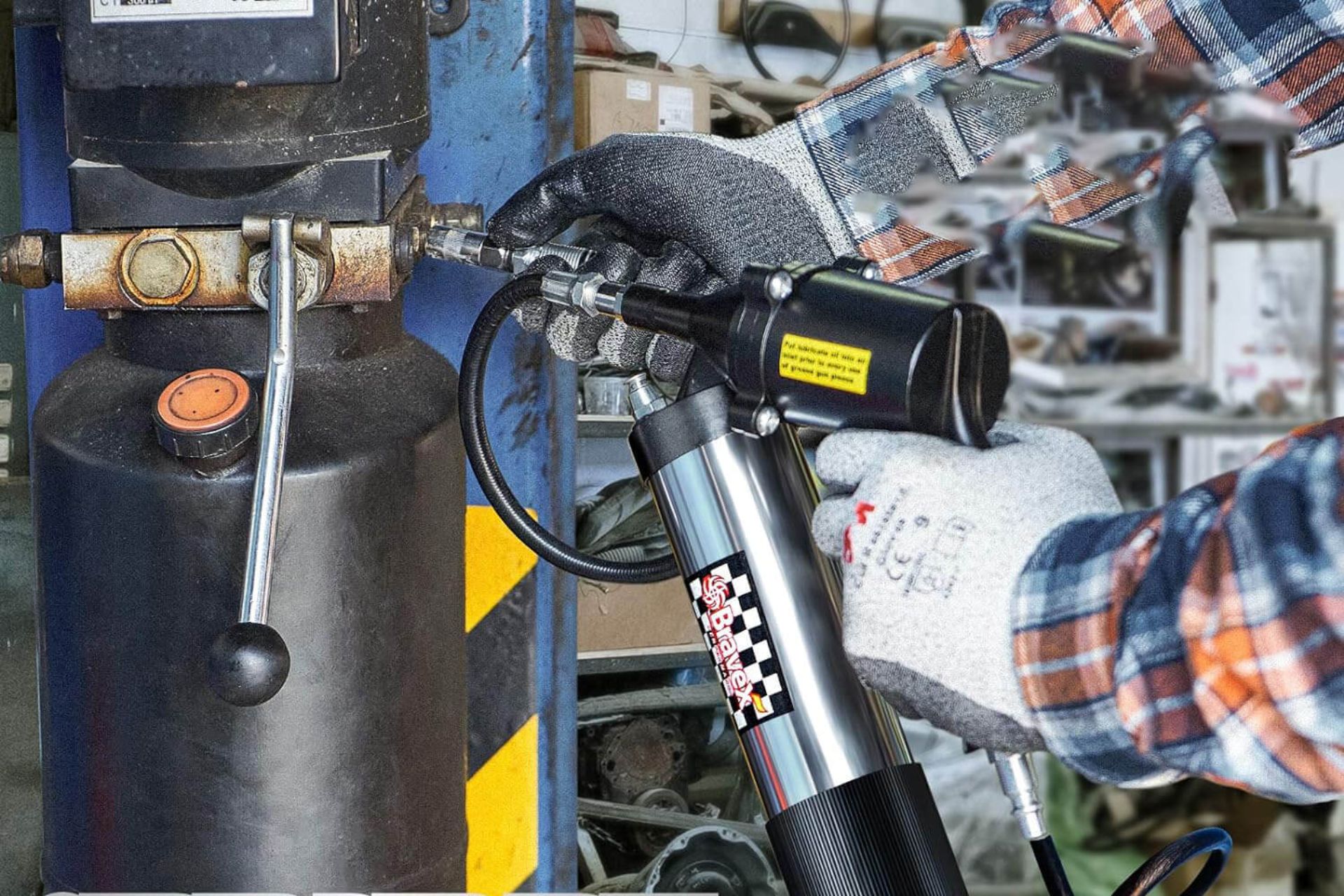
What Is a Zerk Fitting?
A Zerk fitting, also called a grease fitting or grease nipple, is a small metal fitting installed on machinery so lubricant can be injected directly into a bearing, joint, bushing, pivot point, or other moving component.
The fitting contains a small spring-loaded check ball.
When grease is delivered under pressure, the grease pushes the ball inward and flows through the fitting. When pumping stops, the spring pushes the ball back toward its seat, helping prevent grease from escaping.
Zerk fittings are commonly found on:
- Tractors
- Excavators
- Loaders
- Lawn mowers
- Trailers
- U-joints
- Ball joints
- Steering components
- Agricultural equipment
- Construction machinery
- Industrial equipment
The grease gun coupler attaches to the head of the Zerk and creates a seal so grease can be delivered under substantial pressure without simply leaking around the fitting.
That tight seal is necessary—but it is also why the coupler can sometimes become difficult to remove.
Why Does a Grease Gun Get Stuck on a Zerk?
Before trying to remove the tool, determine why it is stuck.
Several conditions can cause the problem.
Residual Hydraulic Pressure
Pressure is one of the most common causes.
A Grease Gun is designed to generate significant pressure to push thick lubricant through small passages. If the grease encounters resistance, pressure can remain trapped in the hose and coupler.
That pressure can force the coupler’s internal jaws tightly against the Zerk fitting.
The harder you pull, the more stubborn the connection may seem.
Coupler Is Adjusted Too Tightly
Many conventional grease couplers are adjustable.
The outer section of the coupler changes how tightly the internal jaws grip the fitting.
If adjusted excessively tight, the coupler may attach beautifully without leaking—but become extremely difficult to remove.
Finding the right balance is important.
Zerk Fitting Is Clogged
A blocked fitting prevents grease from flowing where it should.
As you continue pumping, pressure rises instead.
Eventually, the coupler may become difficult to disconnect because the pressure has nowhere to go.
Coupler Is Attached at an Angle
Grease couplers generally work best when aligned correctly with the fitting.
Connecting at a severe angle can make the internal jaws grip unevenly.
When you later attempt to remove the coupler, those jaws can bind against the head of the Zerk.
Damaged Zerk Fitting
A worn, rusty, bent, or damaged fitting can also cause trouble.
If the head of the Zerk is distorted, the coupler jaws may not slide over it normally during removal.
Worn Grease Gun Coupler
Do not automatically blame the Zerk.
The coupler itself may be worn.
Internal jaws, springs, seals, and other components deteriorate over time. A worn coupler can leak, grip inconsistently, or refuse to release properly.
How to Get a Grease Gun Off a Zerk Step by Step
When the coupler refuses to release, avoid immediately reaching for pliers and applying maximum force.
Use a progressive approach.
Start with the gentlest technique and move to more involved methods only when necessary.
Step 1: Stop Pumping the Grease Gun
First, stop adding grease.
This sounds obvious, but it is important.
If the fitting is blocked or the component is already full, every additional pump can increase pressure inside the system.
More pressure can make the coupler grip even tighter.
If you are using a battery-powered grease gun, release the trigger immediately.
With a pneumatic model, stop activating the gun.
With a manual lever or pistol-grip model, stop pumping.
Do not attempt to solve a stuck coupler by forcing more grease into the fitting.
Step 2: Keep the Coupler Under Control
Before trying to disconnect anything, stabilize the grease gun hose and coupler.
Do not let a pressurized hose whip around.
Wear appropriate eye protection and gloves, particularly when working with a powered grease gun. High-pressure grease should be treated seriously.
Position yourself so that your face and exposed skin are not directly in front of the connection.
Now inspect the coupler and Zerk.
Look for:
- Visible damage
- A bent Zerk
- Grease leaking around the connection
- An unusually angled coupler
- A locking mechanism
- An adjustable coupler sleeve
- A pressure-relief mechanism
Knowing which coupler design you have can make the next step considerably easier.
Step 3: Try a Gentle Twist-and-Pull Motion
If the connection is not heavily pressurized, a small amount of movement may be enough to release it.
Hold the coupler itself rather than pulling on the hose.
Apply a slight twisting or rocking movement while gently pulling the coupler away from the Zerk.
The key word is gently.
You are trying to help the internal jaws disengage—not bend the fitting.
Avoid violent side-to-side movements.
A Zerk fitting is relatively small. Applying too much lateral force can damage its threads or snap the fitting.
If gentle manipulation does not work, stop and address the pressure.
Step 4: Relieve Pressure From the Grease Gun
When a coupler feels completely locked in place, trapped pressure should be considered.
Some grease guns have a pressure-relief mechanism.
If your model provides one, follow the manufacturer’s instructions for relieving line pressure.
Once pressure drops, the coupler jaws may relax enough to release normally.
This can transform what feels like an impossible connection into an easy removal.
Never place your fingers directly around an opening where pressurized grease could escape.
Step 5: Loosen an Adjustable Grease Gun Coupler
Many standard grease gun couplers have an adjustable outer barrel or sleeve.
If yours does, slightly loosening this portion can reduce the clamping force of the jaws.
Hold the appropriate part of the coupler and rotate the adjustable section only enough to loosen its grip.
You usually do not need to disassemble the entire coupler.
After making a small adjustment, try removing it again.
This is also worth checking when a brand-new grease gun seems unusually difficult to remove from every fitting.
The coupler may simply have been adjusted very tightly from the factory.
Step 6: Release Pressure Through the Connection if Appropriate
If your grease gun lacks a convenient pressure-relief mechanism, consult its instructions for the correct depressurization procedure.
On some conventional systems, pressure can be relieved by carefully loosening an appropriate threaded connection at the coupler or hose.
Only a slight loosening may be necessary.
As soon as the trapped pressure is released, the coupler may loosen.
This procedure must be performed cautiously because grease may escape from the connection.
Never completely remove a pressurized hose or fitting without first controlling the pressure.
If you are uncertain how your particular grease gun is designed, check its manufacturer’s instructions rather than experimenting with a pressurized system.
Step 7: Try Removing the Coupler Again
Once the pressure has been relieved, grip the coupler body.
Give it a small controlled twist or wiggle and pull it away from the Zerk.
In many cases, it will now come off easily.
If it remains firmly attached despite having no obvious pressure behind it, the problem is more likely mechanical.
Possible causes include:
- Coupler adjusted too tightly
- Damaged coupler jaws
- Deformed Zerk head
- Corrosion
- Hardened grease
- Dirt inside the coupler
- Severe misalignment
Inspect these areas before applying additional force.
What If the Grease Gun Still Will Not Come Off?
Sometimes the simple methods are not enough.
At this stage, patience is more useful than strength.
First, make certain pressure has actually been relieved.
Then inspect the coupler to determine whether its grip can be adjusted.
If necessary, use appropriate tools on the metal coupler body rather than twisting or crushing the flexible hose.
A small amount of controlled leverage may help a conventional coupler disengage, but avoid putting heavy sideways force directly on the Zerk.
Breaking the fitting creates a much larger repair job.
If the coupler can be partially disassembled safely after pressure has been eliminated, this may be preferable to sacrificing the Zerk or damaging the machine.
Never Yank a Stuck Grease Gun Coupler
The natural reaction is often:
Pull harder.
That is not necessarily the best response.
A Zerk fitting is much smaller than the grease gun and coupler attached to it.
A forceful sideways yank can:
- Bend the Zerk
- Break the fitting
- Damage the threads
- Damage the coupler
- Damage the grease gun hose
- Turn a simple lubrication task into a repair
The objective is to release the coupler jaws, not overpower them.
Whenever the connection suddenly becomes much harder to remove than usual, investigate the cause.
How Hydraulic Pressure Locks a Grease Gun Coupler
Understanding what is happening inside the connection makes troubleshooting easier.
A standard coupler contains internal jaws that grip the head of the grease fitting.
When grease enters under pressure, the coupler must maintain a tight seal. Otherwise, lubricant would simply escape around the Zerk instead of entering the component.
Suppose the grease passage becomes blocked.
You continue pumping.
Grease cannot move forward easily, so pressure rises inside the hose and coupler.
That pressure contributes to the coupler’s tight grip.
Now you try pulling the coupler away.
Instead of releasing normally, the jaws remain tightly engaged with the Zerk.
This is why reducing pressure is often more effective than increasing pulling force.
How to Tell If a Zerk Fitting Is Clogged
A stuck coupler may be telling you something about the fitting itself.
Watch how the grease gun behaves while pumping.
Warning signs include unusually high resistance, grease refusing to enter, grease escaping around the coupler, or the gun quickly building pressure without delivering much lubricant.
Old grease can harden inside fittings and lubrication passages.
Dirt and corrosion can also interfere with the check ball.
If one Zerk repeatedly causes problems while every other fitting works normally, inspect that particular fitting.
Replacing an inexpensive damaged fitting can sometimes solve the problem completely.
What If Grease Leaks Around the Zerk?
Grease escaping between the coupler and Zerk usually means the seal is inadequate.
Several conditions can cause leakage:
Loose coupler adjustment: The jaws may not grip the fitting tightly enough.
Worn coupler: Internal components may no longer seal correctly.
Damaged Zerk: A deformed head can prevent proper seating.
Poor alignment: The coupler may not be sitting squarely on the fitting.
Blocked fitting: Pressure may rise until grease finds an easier route around the connection.
Do not simply tighten the coupler as far as possible.
An excessively tight adjustment can solve leakage while creating another problem—the coupler becomes extremely difficult to remove.
Adjust it only enough to achieve a secure seal.
How Tight Should a Grease Gun Coupler Be?
The ideal setting is tight enough to prevent grease from escaping but loose enough to disconnect after lubrication.
A coupler that falls off under pressure is too loose.
A coupler that requires extreme force every time you remove it is probably too tight or worn.
Make small adjustments.
Test the coupler on a good, accessible Zerk fitting before using it in a difficult location.
This simple test can save considerable frustration when servicing machinery with recessed fittings.
Standard vs Locking Grease Gun Couplers
If you frequently struggle with stuck couplers, consider the design you are using.
Traditional couplers rely on internal jaws to grip the fitting.
They are inexpensive, compact, and effective, but adjustment can be important.
Locking grease couplers use a mechanical release system, often operated by a lever.
The operator activates the mechanism to open or retract the jaws, pushes the coupler onto the Zerk, and releases the mechanism to lock it in place.
After greasing, operating the release mechanism disengages the coupler.
This design can be particularly convenient when servicing dozens of fittings.
However, locking couplers are generally larger than basic couplers, so they may not fit every recessed or tightly positioned Zerk.
How to Prevent a Grease Gun From Getting Stuck Again
Prevention starts before you pull the trigger or pump the lever.
Clean the Zerk before connecting your grease gun.
Dirt around the fitting can contaminate the lubricant and interfere with the coupler.
Push the coupler onto the fitting squarely rather than forcing it on at an extreme angle.
While pumping, pay attention to resistance.
If pressure suddenly increases and grease stops flowing, do not continue pumping indefinitely.
Something is restricting the grease.
After lubrication, relieve excessive pressure when necessary and disconnect the coupler using controlled movement.
Periodically inspect the coupler jaws and seals.
A small amount of routine maintenance can prevent repeated problems.
Clean the Zerk Before Every Lubrication Job
Cleaning grease fittings is important for more than easy coupler removal.
A dirty fitting can introduce abrasive contamination directly into the component you are trying to protect.
Before attaching the Grease Gun, wipe the fitting with a clean shop towel.
Remove:
- Dirt
- Sand
- Metal particles
- Old grease
- Mud
- Rust debris
Also wipe the grease coupler if it has been dropped onto a dirty floor or ground.
Fresh grease cannot protect a bearing effectively if abrasive contaminants are injected along with it.
Avoid Over-Greasing Components
Another way to reduce pressure-related problems is to avoid excessive lubrication.
More grease is not automatically better.
Some components can be damaged by over-greasing.
Excess lubricant may increase pressure against seals or simply create unnecessary mess and waste.
Follow the machinery manufacturer’s recommended lubrication quantity and interval whenever that information is available.
If you notice grease appearing from a designated purge area or other indication specified by the manufacturer, stop according to the equipment’s lubrication procedure.
Do not continue pumping merely because the grease gun still operates.
What to Do With a Damaged Zerk Fitting
After freeing the coupler, inspect the fitting.
Look closely at the head and threaded area.
If the fitting is bent, cracked, heavily corroded, loose, or deformed, replacement may be worthwhile.
Continuing to use a damaged Zerk can cause repeated coupler problems and may prevent proper lubrication.
When replacing it, use the correct fitting type, size, angle, and thread specification for the equipment.
Do not assume all grease fittings are interchangeable.
When Should You Replace the Grease Gun Coupler?
Couplers are wear items.
Replacement should be considered when the coupler:
- Leaks continuously
- Will not grip Zerks
- Becomes difficult to remove from most fittings
- Has visibly damaged jaws
- Has damaged threads
- Requires constant adjustment
- No longer seals reliably
If your Grease Gun works correctly but connection problems occur on nearly every fitting, the coupler is an obvious component to inspect.
Replacing a worn coupler can be far cheaper than replacing the entire grease gun.
Manual vs Cordless Grease Gun: Does It Affect Sticking?
The fundamental coupler problem can occur with either type.
However, powered grease guns can build pressure quickly because the electric motor continues pumping as long as the trigger is activated.
That makes it especially important to pay attention to changes in sound, flow, and resistance.
Manual guns provide more direct feedback through the lever or pistol grip.
You can often feel resistance increasing as pressure builds.
Regardless of the gun type, stop pumping when the fitting stops accepting grease normally.
Do not try to overpower a blockage.
Safety Tips When Removing a Stuck Grease Gun
High-pressure lubrication equipment deserves respect.
Always wear eye protection when dealing with a pressurized or stuck connection.
Keep hands away from suspected high-pressure leaks.
Never test for a leak by placing a finger over the hose, coupler, or fitting.
Do not point the grease gun toward yourself or another person.
Before loosening threaded components, reduce pressure according to the manufacturer’s procedure.
If a hose is damaged, replace it rather than attempting a temporary repair.
High-pressure grease injection injuries can be serious and require prompt medical attention.
Common Grease Gun Removal Mistakes
Several mistakes make the problem worse.
Pulling on the Hose
Pull the coupler—not the flexible hose.
Repeatedly yanking the hose can damage the hose or its connection.
Applying Excessive Sideways Force
The fitting can bend or break.
Use controlled movement rather than treating the Zerk as a lever.
Continuing to Pump
If grease is not entering the fitting, additional pumping can increase pressure.
Stop and investigate.
Overtightening the Coupler
A leak does not always mean the coupler needs maximum tightening.
Find the minimum adjustment that provides a reliable seal.
Ignoring a Bad Zerk
When the same fitting causes trouble repeatedly, replacing or servicing that fitting may be more effective than adjusting your grease gun every time.
Quick Troubleshooting Guide
If the grease gun coupler is stuck, use this sequence:
1. Stop pumping.
Do not add additional pressure.
2. Stabilize the coupler.
Avoid pulling aggressively on the hose.
3. Try gentle movement.
Use a controlled twist or wiggle while pulling outward.
4. Relieve pressure.
Use the grease gun’s designated pressure-release procedure when available.
5. Check coupler adjustment.
Slightly loosen an adjustable standard coupler if it is gripping too tightly.
6. Inspect the Zerk.
Look for damage, corrosion, blockage, or deformation.
7. Inspect the coupler.
Worn jaws or seals may need replacement.
8. Consider a locking coupler.
If sticking happens frequently, a mechanically released coupler can make routine maintenance easier.
This approach addresses the cause rather than simply applying more force.
Frequently Asked Questions
Why Won’t My Grease Gun Come Off the Zerk?
Residual hydraulic pressure, an overly tight coupler, poor alignment, a clogged fitting, or damaged coupler jaws can make removal difficult.
Should You Pull a Grease Gun Coupler Straight Off?
A conventional coupler may respond to gentle twisting or rocking combined with controlled outward force. Avoid aggressive sideways leverage that could bend or break the Zerk.
Can Too Much Pressure Make a Grease Gun Stick?
Yes. If grease cannot flow into the component, pressure can remain in the hose and coupler and contribute to the jaws gripping the Zerk tightly.
Can I Loosen the Grease Gun Coupler?
Many conventional couplers allow grip adjustment through their outer body or sleeve. Slightly reducing jaw tension can make removal easier. Always determine how your specific coupler is designed before adjusting it.
Why Does Grease Come Out Around the Zerk Instead of Going Inside?
Possible causes include a loose or worn coupler, poor alignment, a damaged fitting, or a clogged grease passage.
Should I Replace a Zerk That Keeps Getting the Grease Gun Stuck?
Inspect it first. If the Zerk is damaged, deformed, severely corroded, or blocked and cannot be restored to proper operation, replacement may be appropriate.
Are Locking Grease Couplers Easier to Remove?
They can be. A quality locking coupler uses a mechanical release mechanism to disengage its jaws, which can make attachment and removal more predictable.
Why Is My New Grease Gun Coupler So Tight?
Some adjustable couplers may arrive with a tight jaw setting. Check the manufacturer’s instructions to determine whether your model can be adjusted before forcing it off a Zerk.
Conclusion
Knowing how to get a Grease Gun off a Zerk is mostly about understanding why the coupler is refusing to release. Instead of yanking harder, stop pumping, stabilize the connection, try gentle movement, and relieve residual pressure using the correct procedure for your grease gun. If necessary, check whether the coupler can be adjusted and inspect both the coupler and Zerk for wear or damage.
A coupler that repeatedly becomes stuck should not be ignored. Excessive pressure may indicate a clogged fitting or restricted grease passage, while constant mechanical binding can point to poor adjustment, damaged jaws, or a worn Zerk.
Keeping fittings clean, attaching the coupler squarely, avoiding unnecessary over-greasing, maintaining the coupler, and using a suitable locking coupler when appropriate can make future lubrication jobs much easier.
Most importantly, never rely on brute force around a pressurized lubrication system. A properly maintained Grease Gun should attach securely, deliver lubricant efficiently, and disconnect without turning routine maintenance into a wrestling match.
